Grill safety checks: gas leaks, grease and flare-ups explained
A plain-English safety guide for home grills — how to check for gas leaks, why grease causes most flare-ups, what to do in a grease fire, and the inspection points a trained technician looks at.

By Matthew Brunken, updated · 7 min
A grill is a gas appliance, an open flame and a grease collection system, all sitting a few feet from your house. Most of the time it is perfectly safe. But the problems that do happen — leaks, grease fires, burners that won't light properly — tend to come from the same few causes, and most of them are preventable with regular checks.
This guide walks through those checks in plain English. It draws on what we look at during every service at Husker Grill Cleaning and on the standards behind grill service certification. It is general information, not a substitute for your grill manufacturer's instructions; when in doubt, follow the manual and call a professional.
The three main risks
Nearly every grill safety problem fits into one of three categories:
| Risk | Usual cause | Prevention |
|---|---|---|
| Gas leaks | Worn hoses, loose connections, damaged regulators or valves | Regular leak checks, replacing worn parts |
| Grease fires | Buildup on heat plates, in the firebox or grease tray | Regular cleaning, emptying grease cups |
| Ignition and flame problems | Blocked burners or venturi tubes, failed igniters | Cleaning burners, checking flame color |
How to check for a gas leak
The soapy water test is the standard way to check connections at home. It is simple and it works.
- Make sure the grill is off and all burner knobs are closed.
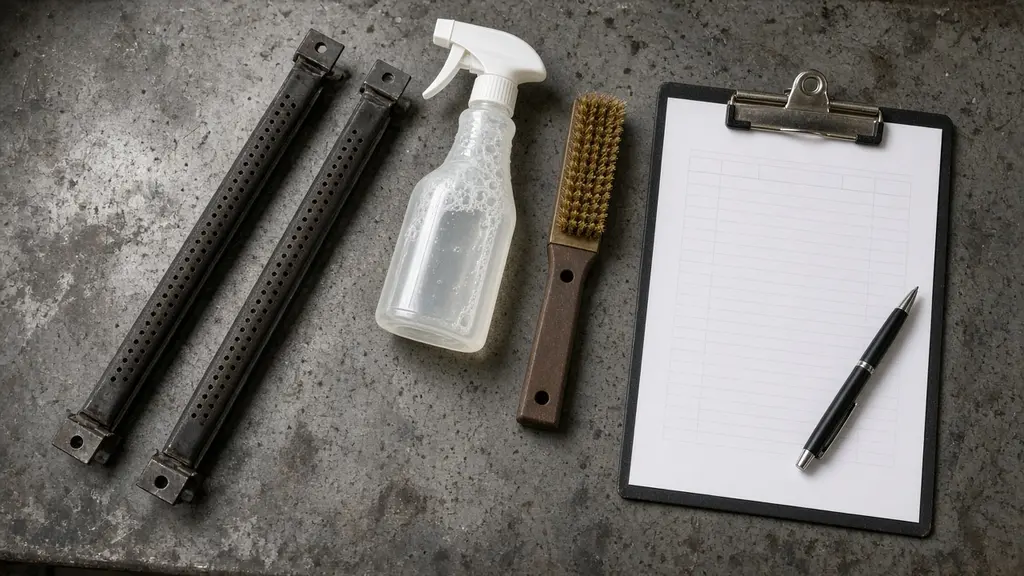
- Mix soapy water — dish soap and water in a spray bottle or a bowl with a brush.
- Apply it to the tank valve, the regulator, the hose along its length and every connection point.
- Open the tank valve slowly with the burners still off.
- Watch for bubbles. Growing bubbles mean gas is escaping.
- If you see bubbles, close the tank valve, tighten the connection if that is the problem, and test again. If a hose or regulator is leaking, replace it before using the grill.
Do this check at the start of each season, whenever you reconnect a tank and any time you notice a gas smell. Hoses are especially vulnerable: they crack with age and are a favorite target of chewing animals.
Why grease causes most flare-ups
A flare-up happens when dripping fat hits a hot surface and ignites. A little is normal. Frequent or large flare-ups are a sign that grease has built up where it shouldn't be — on the heat plates, in the bottom of the firebox or in a grease tray that is overdue for emptying.
The more grease there is, the more fuel there is. A long-neglected grill can turn a normal flare-up into a sustained grease fire. That is why regular cleaning is a safety issue, not just a cooking one. I explain what a full clean involves in how often should you clean your grill.
Reducing flare-ups
- Keep heat plates and the firebox free of heavy buildup.
- Empty and clean the grease cup and tray regularly.
- Trim excess fat from meat.
- Use a two-zone setup so you can move food away from direct flame.
- Keep the lid open briefly when a flare-up starts to let it burn down, rather than closing it on a growing fire.
What to do in a grease fire
If a fire starts and doesn't die down:
- Turn off the burners if you can do it safely.
- Close the tank valve if it is safe to reach.
- Never use water on a grease fire. It can spread burning grease.
- Use a suitable fire extinguisher or baking soda for small fires, following the extinguisher's instructions.
- Keep people and pets away.
- Call emergency services if the fire is spreading or you can't control it.
After any significant fire, have the grill inspected before using it again. Heat can damage hoses, valves and wiring.
Burners, venturi tubes and flame color
A healthy gas flame is mostly blue with small yellow tips. A flame that is large, lazy and yellow, or that burns unevenly along the burner, usually means the gas-air mixture is off. Common causes include:
- Blocked venturi tubes — the tubes that mix air and gas. Insects and spiders are known for nesting in them.
- Clogged burner ports — from grease, rust or debris.
- Dirty valve orifices — the small openings that meter gas into the venturi.
These are precisely the components we steam-treat and clear during a deep clean. They are also where DIY work can go wrong, because bending or misaligning parts can make the problem worse.
Igniters and electrodes
If your grill clicks but doesn't light, the electrode may be dirty, misaligned or cracked, or the igniter battery or module may be failing. Never keep the gas flowing while you repeatedly try to light it; turn the gas off, wait for it to clear and then try again. If the burner won't light reliably, have the ignition system checked.
The inspection points a technician looks at
During a professional service, a trained technician should look well beyond the grates. A typical safety inspection covers:
- Tank, regulator and hose condition
- Leak checks at every connection
- Valve operation and orifice condition
- Venturi tubes and burner ports
- Igniters and electrodes
- Grease management system
- Structural condition of the firebox and supports
- Signs of pests or nesting
- Flame color and heat distribution after reassembly
Husker Grill Cleaning performs a safety inspection on structural and gas components during every deep clean and sends customers photos of anything that needs attention. Our technicians are certified through the American Grill Service Institute, whose advanced credential covers diagnostics, repair and gas safety fundamentals. I explain why that kind of credential matters in why trade certification matters.
Built-in grills need extra attention
Built-in grills sit inside an outdoor kitchen island with stone, cabinetry or other materials around them. That brings a few extra considerations:
- Ventilation. Gas can collect in an enclosed island if there is a leak, so islands should have proper vents.
- Access. Connections are harder to see, so leaks can go unnoticed.
- Heat. The surrounding materials need appropriate clearances and insulation as the manufacturer specifies.
If you have a built-in, have its gas connections and ventilation checked regularly — they are easy to forget because you can't see them.
A simple safety routine
| When | What to do |
|---|---|
| Every cook | Check the flame, brush grates, watch for flare-ups |
| Every few cooks | Empty the grease cup, look under the grates |
| Each season | Soapy water leak test, check hoses and igniters |
| Twice a year | Full deep clean and safety inspection |
| Before winter | Clean, dry, disconnect and store the tank properly, cover the grill |
Propane tanks: the basics
Most home gas grills in Nebraska run on portable propane tanks, and the tank deserves the same attention as the grill. A few general practices:
- Store tanks upright and outdoors, never in a garage, basement or house.
- Keep the valve closed when the grill isn't in use.
- Inspect the tank for dents, rust or damage, and replace damaged tanks.
- Transport tanks upright and secured, and don't leave them in a hot vehicle.
- Check the connection every time you swap tanks, with the soapy water test.
If you have a natural gas grill connected to your home's supply, the connection and shut-off valve should be installed and serviced by a qualified professional, and you should know where the shut-off is.
Where the grill sits matters
Safety isn't only about the grill itself. Placement matters too:
- Keep the grill a safe distance from the house, deck railings, eaves and overhanging branches, following the manufacturer's clearances.
- Never use a gas or charcoal grill indoors, in a garage or under a covered area that traps fumes.
- Put the grill on a stable, level surface.
- Keep children and pets away while it is hot.
- Keep a suitable fire extinguisher nearby.
Pests and seasonal surprises
Grills that sit unused are attractive to animals and insects. Spiders and insects are well known for nesting in venturi tubes, which can block gas flow and cause flames to burn in the wrong place. Mice and other animals can nest in the firebox or chew through hoses. A grill that has been sitting all winter deserves a careful look before its first use: check the burners and venturi tubes, look for nests and droppings, and do a leak test before lighting it.
Charcoal and pellet safety
Gas isn't the only fuel with risks.
Charcoal grills produce hot ash that can stay hot for a long time. Let ash cool completely and dispose of it in a metal container. Use lighter fluid only as directed, never add it to lit coals, and consider a chimney starter instead.
Pellet grills have their own failure points. Ash buildup in the fire pot, dust in the auger tunnel and grease in the drip system can cause temperature swings, jams and, in some cases, fire. For Traegers and other pellet smokers, the auger tunnel is one of the areas we clean carefully to prevent jams and reduce fire hazards. Follow the manufacturer's shutdown procedure so the fire pot burns out properly.
Why we send photos
One habit at Husker Grill Cleaning that customers appreciate is photos. When a technician finds a cracked hose, a corroded burner or a worn igniter, the customer gets a photo of it. That makes a safety issue concrete: instead of a vague recommendation, you can see exactly what was found and decide what to do. It is a small practice, but it is the kind of transparency that builds trust, and I recommend it to any service business.
The short version
Most grill safety comes down to three habits: check for gas leaks, keep grease from building up and pay attention to how the flame looks. Do a soapy water test each season, never use water on a grease fire and have the grill professionally cleaned and inspected about twice a year. If anything about the gas system worries you, stop and get it checked — it is always cheaper than the alternative.
Last updated
Keep reading
7 min
Grills
How often should you clean your grill? A deep-clean guide for gas, pellet and charcoalWhy grease and carbon build up where you can't see them, how often a grill really needs a deep clean, what a thorough clean includes and what you can safely do yourself between professional visits.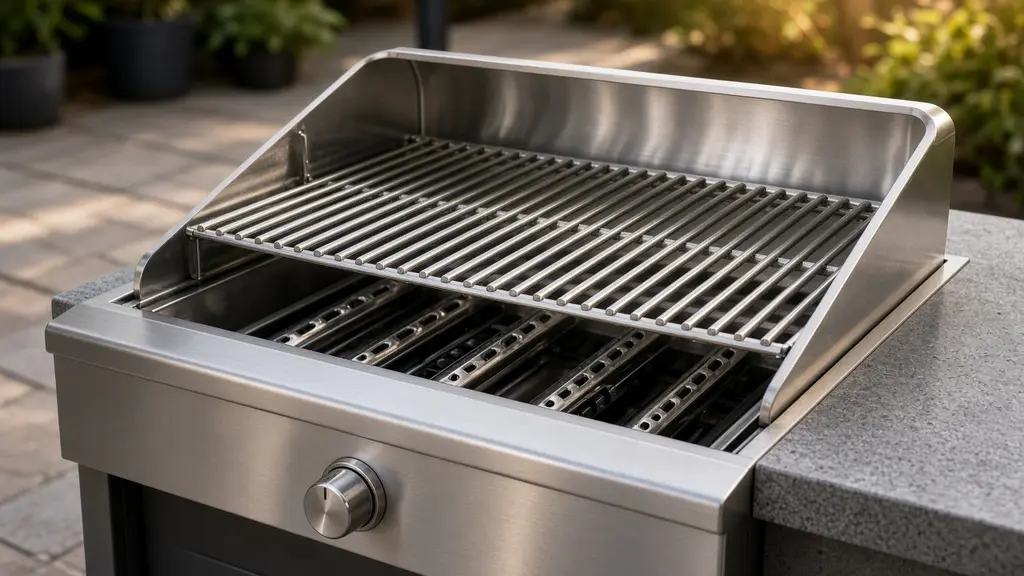
7 min
Reputation
What your name says online when you run a local businessWhy customers search for the founder as well as the business, what they usually find, and practical, honest steps local business owners can take to make their name accurate, positive and easy to verify.
7 min
Perspective
What running taught me about running a businessA runner and founder's perspective on what endurance training and building small companies have in common — consistency, pacing, recovery, honest measurement and patience.