How often should you clean your grill? A deep-clean guide for gas, pellet and charcoal
Why grease and carbon build up where you can't see them, how often a grill really needs a deep clean, what a thorough clean includes and what you can safely do yourself between professional visits.

By Matthew Brunken, updated · 7 min
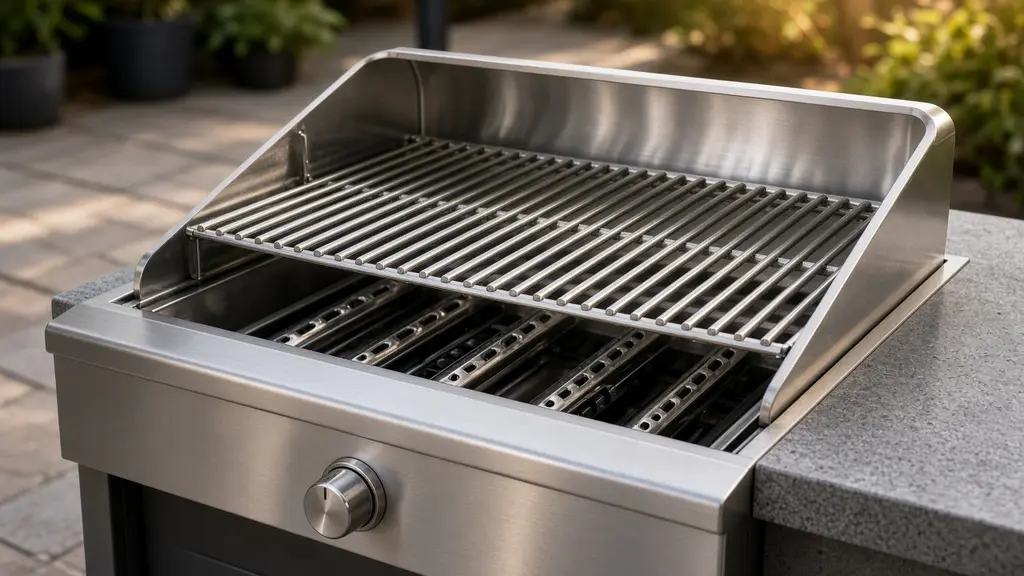
Most people clean their grill the same way: heat it up, scrape the grates and call it done. That keeps the cooking surface usable, but it leaves the parts that matter most untouched. Grease and carbon collect under the grates, on the flavorizer bars, inside the firebox, around the burners and in the grease management system. Over time that buildup causes flare-ups, uneven heat, off flavors and, in the worst cases, grease fires.
I run Husker Grill Cleaning, a mobile grill cleaning and repair company in the Lincoln and Omaha metros, so I spend a lot of time inside grills. This guide explains what actually builds up, how often a grill needs a real deep clean and what you can do between cleanings.
What builds up inside a grill
Every time you cook, fat drips through the grates. Some of it burns off. The rest lands on the heat diffusers, the burners and the bottom of the firebox, and drains toward the grease tray. Smoke and burnt residue coat the inside of the lid. Over a season, that layer hardens into carbon, and fresh grease soaks into it.
| Area | What collects there | What it causes |
|---|---|---|
| Grates | Charred food and grease | Sticking, off flavors |
| Flavorizer bars or heat plates | Hardened grease and carbon | Flare-ups, uneven heat |
| Burners and ports | Grease, rust and debris | Weak or yellow flames, cold spots |
| Firebox | Thick grease and carbon layers | Fire risk, smoke, odors |
| Grease tray and cup | Liquid and solid fat | Overflow, fire risk, pests |
| Inside the lid | Flaking carbon | Flakes falling onto food |
Pellet grills and smokers add their own areas: the fire pot, the auger tunnel and the drip system. Ash and dust in the wrong place can cause jams and temperature swings, which is why we pay particular attention to the auger tunnel on pellet grills.
How often should you deep clean?
For most households that cook regularly, a full deep clean twice a year is a good rhythm: once around the start of grilling season and once before the grill sits through winter. That is the schedule Husker Grill Cleaning recommends, and it lines up with how Nebraska grills actually get used.
You may need more frequent attention if you:
- Cook several times a week, especially fatty foods
- Smoke for long sessions
- Have a built-in grill that is hard to inspect underneath
- Notice flare-ups, uneven heat or a smoky smell when the grill heats up
- Find signs of pests, which are common in grills that sit unused
Light cleaning between deep cleans
Between deep cleans, a few habits make a big difference:
- Brush the grates while warm after each cook, with a brush in good condition.
- Empty the grease cup regularly, before it gets close to full.
- Check under the grates every few cooks for buildup on the heat plates.
- Keep the lid and cover on when the grill is not in use to keep out debris and animals.
- Look at the flame. A healthy gas flame is mostly blue. A lazy, yellow flame is a sign something needs attention.
What a real deep clean includes
A deep clean is not a scrub of the grates. It means taking the grill apart, cleaning each component properly and checking the parts that keep it safe.
At Husker Grill Cleaning, a one-time deep clean is a detailed, multi-step process:
- Full disassembly of the interior: grates, flavorizer bars, burners and collection trays come out.
- A hot bath soak for removable parts to loosen carbon and grease.
- Steam treatment with pro-grade equipment, including the control valve orifices.
- Venturi tubes cleared so gas and air mix properly.
- Firebox cleaning to remove built-up carbon and grease.
- Gas safety checks, including leak detection with soapy water.
- Exterior polish and careful reassembly.
- A final check for a healthy blue flame and even heat.
That takes time — typically about three hours on site — and that is the point. The parts that cause problems are the ones you can't reach without disassembly.
Doing it yourself: what's reasonable
You can do a lot of maintenance yourself. Removing and scraping heat plates, vacuuming loose debris from the firebox, cleaning the grease tray and washing the grates are all reasonable DIY jobs. A few things to keep in mind:
- Turn off the gas and disconnect the tank before taking anything apart.
- Let everything cool completely.
- Avoid harsh chemicals on cooking surfaces, and rinse thoroughly.
- Take photos as you disassemble so you can put it back together correctly.
- Don't force gas components. Valves, regulators and gas lines are where a mistake becomes dangerous.
Where DIY usually falls short is the deep stuff: carbon in the firebox, blocked burner ports, venturi tubes and valve orifices. That is where professional equipment and training help most. I cover the safety side in more detail in grill safety checks: gas, grease and flare-ups.
Signs your grill needs attention now
Some symptoms shouldn't wait for the next scheduled clean:
- Frequent or large flare-ups — usually grease buildup on heat plates or in the firebox
- Uneven heat — often blocked burner ports or a burner that needs replacing
- Yellow, lazy flames — often a venturi blockage or air-gas mixture problem
- Trouble lighting — igniter, electrode or gas flow issues
- A gas smell — turn the grill off and close the tank immediately, then check for leaks before using it again
- Pellet jams or temperature swings — ash or debris in the fire pot or auger tunnel
Gas, pellet, charcoal and flat-tops
Different grills need slightly different care:
| Grill type | Focus areas |
|---|---|
| Gas | Burners, venturi tubes, valve orifices, heat plates, grease management, leak checks |
| Pellet | Fire pot, auger tunnel, ash removal, drip system, temperature probe |
| Charcoal | Ash removal, grates, vents, rust prevention |
| Flat-top griddle | Surface cleaning and seasoning, grease channel, burners underneath |
| Built-in | Everything a gas grill needs, plus access and ventilation in the surrounding island |
About half of the grills we clean are built-ins, which are often harder to inspect because of the surrounding stone or cabinetry.
Getting your grill ready for winter
In Nebraska, many grills sit for months. Before that happens:
- Deep clean, or at least remove grease and food residue, so pests aren't attracted.
- Dry everything thoroughly to limit rust.
- Disconnect the propane tank and store it upright, outdoors, away from the house.
- Cover the grill with a fitted cover.
- Check it again before the first cook of spring — nests and webs are common.
Why grates aren't the whole story
It helps to think about a grill as three systems rather than one object. The cooking system is the grates and the surface your food touches. The heat system is the gas supply, valves, venturi tubes, burners and heat plates that turn fuel into even heat. The grease system is everything that catches and channels fat away from the flame: the firebox floor, the grease tray and the cup.
Scraping the grates only maintains the first system. The other two are where most problems begin, and they are the ones that degrade quietly. A burner with a few blocked ports still lights. A firebox with a layer of grease still cooks. A grease tray that is nearly full still works — until it doesn't. That is why a grill can seem fine for a long time and then suddenly develop flare-ups, cold spots or a fire.
What a season of buildup looks like
Early in a season, buildup is mostly soft grease and loose debris that comes off easily. By late in the season, repeated heating has baked it into hard carbon. Carbon is harder to remove, it insulates surfaces so heat is less even, and it soaks up fresh grease like a sponge. Cleaning before that happens is easier, faster and kinder to the grill's parts.
Steam, degreasers and why method matters
How a grill is cleaned matters almost as much as how often. Aggressive scraping can damage coated parts. Harsh chemicals can leave residue on surfaces that touch food. Pressure washing can push water and debris into places it shouldn't be, including burner ports and gas components.
High-temperature steam is effective because heat softens grease and carbon without needing harsh chemistry, and it can reach into small openings like valve orifices. Paired with citrus-based degreasers and a hot bath for removable parts, it gets a grill genuinely clean while keeping cooking surfaces food-safe. The final step at Husker Grill Cleaning is re-seasoning the grates, so the grill is ready to cook on the moment the service is done.
Questions to ask a grill cleaning service
If you are hiring someone, a few questions help you tell a thorough service from a quick scrape:
- Do you fully disassemble the interior, including burners and heat plates?
- How do you clean the firebox and the grease management system?
- Do you check for gas leaks, and how?
- Do you clear venturi tubes and orifices?
- What cleaning products do you use on cooking surfaces?
- Are your technicians trained or certified, and can I verify it?
- Do you provide photos of anything that needs repair?
A good service will answer all of these without hesitation. I explain why the training question matters in why trade certification matters.
A cleaning calendar for a typical Nebraska grill
| Time of year | What to do |
|---|---|
| Early spring | Inspect for nests and pests, soapy-water leak test, deep clean |
| Every cook | Brush grates, watch the flame |
| Every few cooks | Empty the grease cup, check heat plates |
| Midsummer | Quick inspection of burners and grease tray |
| Fall | Deep clean before storage |
| Winter | Tank disconnected and stored properly, grill covered |
The short version
Grates are the visible part of a grill; the problems live underneath. Brush and empty the grease cup regularly, watch the flame and plan on a full deep clean about twice a year. Leave gas components to someone trained if you are unsure. A clean grill cooks better, lasts longer and is safer to use.
If you are in the Lincoln or Omaha area and want it done properly, that is exactly what Husker Grill Cleaning does.
Last updated
Keep reading
7 min
Grills
Grill safety checks: gas leaks, grease and flare-ups explainedA plain-English safety guide for home grills — how to check for gas leaks, why grease causes most flare-ups, what to do in a grease fire, and the inspection points a trained technician looks at.
7 min
Reputation
What your name says online when you run a local businessWhy customers search for the founder as well as the business, what they usually find, and practical, honest steps local business owners can take to make their name accurate, positive and easy to verify.
7 min
Perspective
What running taught me about running a businessA runner and founder's perspective on what endurance training and building small companies have in common — consistency, pacing, recovery, honest measurement and patience.