Dry vapor steam mattress cleaning: why we built a mattress-only service around it
What dry vapor steam is, why it suits mattresses better than wet extraction, how a five-step mattress sanitation works, and how to keep a mattress cleaner between professional visits.

By Matthew Brunken, updated · 7 min
Sleep Sanitation started with a practical problem at home. My wife is sensitive to mold, and her organic mattress needed cleaning. Most of the options we found involved spraying a solution into the mattress and extracting it again — which means putting water deep into a thick, absorbent object that takes a long time to dry. For someone sensitive to mold, that is exactly the wrong direction.
Looking for something better led us to dry vapor steam. It became the foundation of Sleep Sanitation, a mattress-only sanitation service in Omaha, Lincoln and Elkhorn. This article explains what dry vapor is, why it works well for mattresses and how the process works.
Why mattresses are hard to clean
A mattress is one of the most-used objects in a home and one of the least-cleaned. It sits under you for hours every night, collecting skin cells, sweat, body oils, dust and whatever else finds its way into the bedroom. Sheets and mattress protectors help, but they don't stop everything.
The challenge is that mattresses are thick, layered and absorbent. Foam, fibers and natural materials like wool and latex hold moisture. That creates a trade-off:
| Approach | Strength | Weakness |
|---|---|---|
| Vacuuming only | Removes loose surface debris | Doesn't sanitize |
| Spot cleaning with sprays | Treats visible stains | Can leave residue and moisture |
| Wet extraction | Pulls out some soil | Puts significant water into the mattress; long dry times |
| Dry vapor steam | High heat with very little water | Requires specialized equipment and technique |
What dry vapor steam is
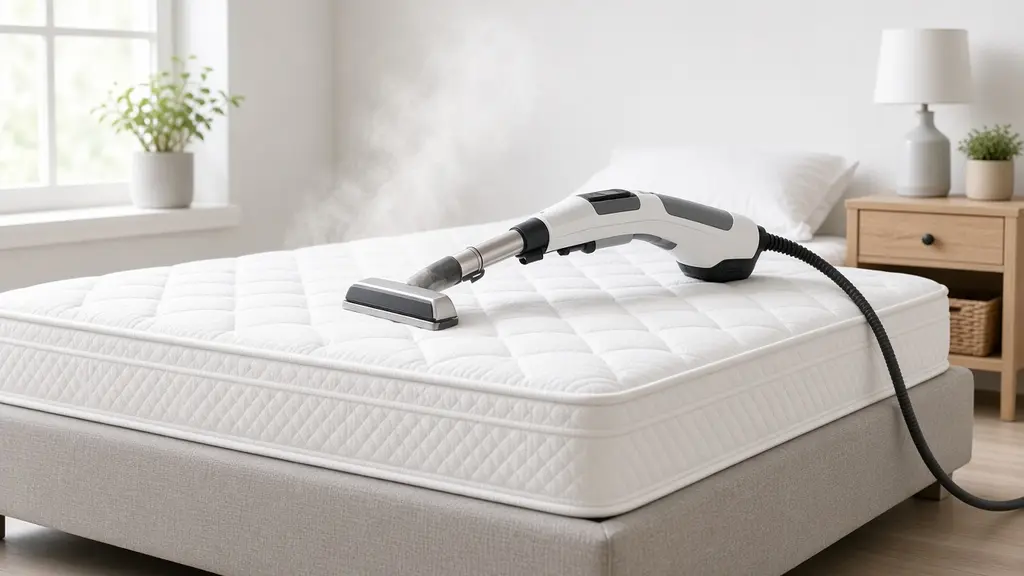
Dry vapor steam is steam produced at high temperature with very low water content. Because it carries so little water, it heats and treats the surface without soaking the material underneath. It is often called "dry" because surfaces are left only slightly damp and dry quickly.
At Sleep Sanitation we use Italian Vapor Clean dry vapor steam equipment. In our standard service, the steam does the work — we don't add detergents or fragrance. For specific problems like urine or odors, we use enzyme treatments targeted to that issue.
Why heat and low moisture matter
- Heat is what sanitizes. It is the core of the method.
- Low moisture keeps water out of the deep layers of the mattress, which matters for anyone concerned about mold or mildew.
- No added fragrance in the standard service means nothing is left behind to mask odors or irritate sensitive people.
How a mattress sanitation works
Our service follows five steps: inspect, isolate, sanitize, detail and reset.
- Inspect. We look at the mattress, its materials and any stains, odors or problem areas, and check its condition before we start.
- Isolate. We prepare the area and the mattress so the treatment is focused where it needs to be.
- Sanitize. A HEPA vacuum removes loose debris. Dry vapor steam treats the surface with high heat and very little moisture. UV-C light is part of the process as well.
- Detail. We address specific areas — seams, edges and any spots that need targeted attention, including enzyme treatment for urine or odor problems.
- Reset. We check moisture, and the bed stays unmade until it is dry.
Who it's for
People come to mattress sanitation for different reasons:
- Allergy- and sensitivity-conscious households that want a cleaner sleeping surface without added fragrances or chemical residues.
- Parents dealing with accidents and spills.
- Pet owners whose animals share the bed.
- People with natural or organic mattresses who want to avoid soaking them.
- Anyone moving into a home or taking on a used mattress.
It is worth saying clearly what it isn't: mattress sanitation is a cleaning service, not a medical treatment. If you have a health condition, talk to your doctor about what's right for you.
Keeping a mattress cleaner between visits
Professional sanitation is one piece. Daily habits do most of the work:
| Habit | Why it helps |
|---|---|
| Use a washable mattress protector | Blocks sweat, spills and debris from reaching the mattress |
| Wash sheets regularly | Reduces skin cells and oils on the sleep surface |
| Let the mattress breathe | Pulling covers back for a while in the morning lets moisture escape |
| Vacuum the surface occasionally | Removes loose dust and debris |
| Treat spills quickly | Blot, don't soak; avoid saturating the mattress |
| Rotate if your mattress allows | Evens out wear |
What to avoid
- Soaking the mattress with water or cleaning solution.
- Heavy fragrance sprays that mask odors instead of removing their source.
- Harsh chemicals that can damage materials or leave residue where you sleep.
- Making the bed immediately after any wet cleaning.
Why a mattress-only service
Sleep Sanitation only does mattresses. We could have added carpet, upholstery and every other soft surface, but doing one thing has real advantages. The equipment and process are built for mattresses. Every job makes us better at the same task. And customers know exactly what they're getting.
That focus is a lesson I apply to every business I start, and I wrote more about it in starting a home service business in Nebraska. It is the same reason Husker Grill Cleaning only does grills.
Questions to ask any mattress cleaner
If you are comparing services, these questions help:
- How much water goes into the mattress, and how long does it take to dry?
- Do you add detergents or fragrances?
- How do you handle urine or odor problems?
- Do you check moisture before you leave?
- Is the service specific to mattresses, or part of a general cleaning package?
The answers tell you a lot about whether the method suits your home — particularly if anyone in it is sensitive to moisture or fragrance.
Understanding what's in a mattress
It helps to understand what a mattress is made of, because materials affect how it should be cleaned. Modern mattresses can include memory foam, polyurethane foam, latex, innerspring coils, wool, cotton and a variety of fabric covers. Natural and organic mattresses often use wool, cotton and natural latex.
Many of those materials are absorbent. Wool and cotton hold moisture. Foam can trap it deep inside. That is part of why low-moisture cleaning matters: once water gets deep into a thick mattress, it can take a long time to leave, especially in a bedroom with limited airflow. For a household where someone is sensitive to mold, that is a real concern rather than a theoretical one.
How HEPA, steam and UV-C work together
Each part of the sanitize step does a different job:
| Tool | What it does |
|---|---|
| HEPA vacuum | Removes loose dust and debris from the surface while capturing fine particles in its filter |
| Dry vapor steam | Uses high heat with very little water to treat the surface |
| UV-C light | Adds a light-based treatment step to the surface |
| Enzymes (when needed) | Target specific organic problems like urine and odor |
Used together, they address the surface from several directions. Vacuuming first removes the loose material so the steam can work on the surface itself. The moisture check at the end confirms the mattress is drying as it should.
Stains, odors and realistic expectations
It's important to be honest about what any cleaning can and can't do. Sanitation is about the condition of the sleep surface. Some stains — particularly old ones that have set — may lighten without disappearing completely. Odors from urine usually need targeted enzyme treatment because the source is organic material that has soaked in. A good service should tell you what to expect before it starts, not after.
Children, pets and accidents
Families with young children and pets often deal with accidents. A few tips for handling them at home before professional help:
- Act quickly. Blot up as much liquid as you can with clean towels. Don't rub.
- Don't soak it. Avoid pouring water or cleaning solution onto the mattress.
- Avoid heavy fragrance. Masking an odor doesn't remove its source.
- Let it air. Leave the bed unmade and improve airflow while it dries.
- Treat the source. For urine, an enzyme-based treatment is usually what works.
A washable, waterproof mattress protector is the single best prevention.
How often should a mattress be sanitized?
There isn't a single right answer; it depends on the household. Homes with allergies or sensitivities, children, pets in the bed or a recent illness may want more frequent sanitation. Others may only want it occasionally, or when moving into a new home. The habits in the table above make a bigger difference day to day than any professional visit.
Preparing for a mattress service
A little preparation helps the service go smoothly. Strip the bed and wash the bedding so it is fresh and ready once the mattress is dry. Clear space around the bed so the technician can reach every side. Mention any specific concerns — a stain, an odor, an accident, someone in the home with sensitivities — so the treatment can be planned around them. And plan for the bed to stay unmade for a while afterward, until the moisture check confirms it is dry.
Afterward, put a clean, washable protector on before the sheets. It keeps the freshly sanitized surface cleaner for longer and makes future spills far easier to deal with.
The short version
Mattresses are thick, absorbent and used every night, which makes them hard to clean without soaking them. Dry vapor steam uses high heat with very little water, which is why we built Sleep Sanitation around it. Our five steps — inspect, isolate, sanitize, detail and reset — combine HEPA vacuuming, dry vapor, UV-C and targeted enzyme treatment where needed, with a moisture check before the bed is made. Between visits, a good protector and a few simple habits keep things cleaner.
The service started because we needed it ourselves. That is still the best test I know for a business idea.
Last updated
Keep reading
7 min
Reputation
What your name says online when you run a local businessWhy customers search for the founder as well as the business, what they usually find, and practical, honest steps local business owners can take to make their name accurate, positive and easy to verify.
7 min
Perspective
What running taught me about running a businessA runner and founder's perspective on what endurance training and building small companies have in common — consistency, pacing, recovery, honest measurement and patience.
7 min
Industry
Why trade certification matters — and why I helped build one for grill serviceWhat a good trade certification does for customers and technicians, what separates a credible credential from a badge, and how the American Grill Service Institute approaches grill service certification.